Phishing in 2026: How Business Email Compromise Actually Works — And How to Stop It

Nadia Patel
August 24, 2026 · 5 min read
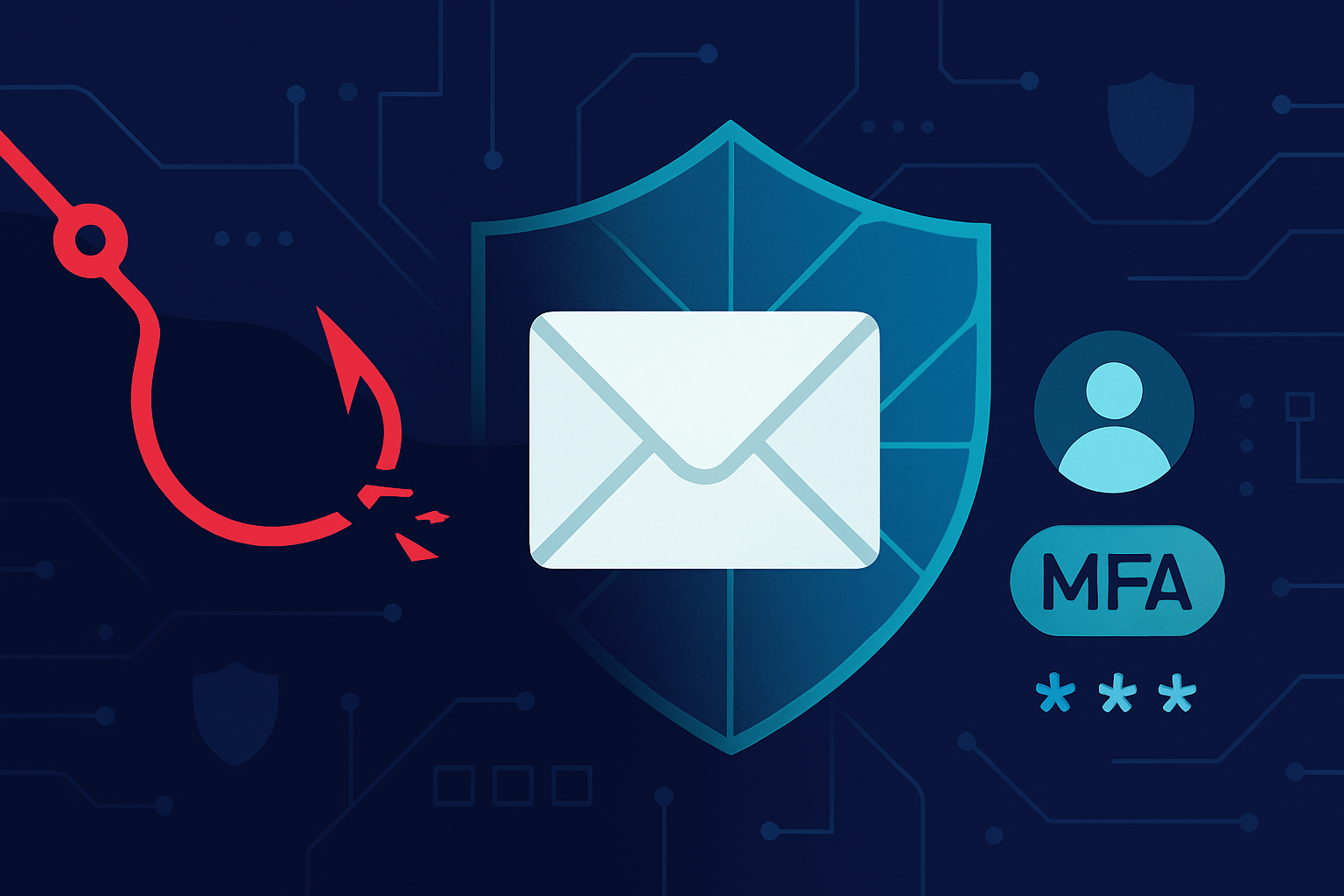
Ransomware gets the headlines. Business Email Compromise pays the attackers. In 2026, BEC is still the single most expensive category of cybercrime against U.S. businesses — and almost every incident is preventable.
What BEC Actually Is — And Isn’t
Business Email Compromise (BEC) is a family of attacks in which criminals impersonate a trusted party over email to trick a business into moving money, changing payment instructions, or handing over sensitive data. Unlike ransomware, there is often no malware involved. There is no exotic exploit. The vulnerability is process, identity, and human judgment — and that is what makes BEC both cheap to run and hard to detect.
The FBI’s Internet Crime Complaint Center has ranked BEC as the top-loss category of reported cybercrime for most of the last decade, with reported annual losses regularly measured in billions of dollars. Unreported losses are almost certainly a multiple of that.
The Four BEC Patterns You’ll Actually See
1. The Fake Executive Wire Request
A message appears in the finance team’s inbox from the CEO or CFO, sent from a lookalike domain or a compromised executive mailbox. It requests an urgent wire transfer for a “confidential acquisition,” a “vendor deposit,” or a “same-day tax obligation.” It emphasizes secrecy, urgency, and skipping normal channels. Anyone who has been in finance for more than a year has seen at least one of these; unfortunately, plenty have paid.
2. Vendor Impersonation and Payment Redirection
An attacker either compromises a real vendor mailbox or spoofs one convincingly. A legitimate-looking invoice arrives with new bank details “because we’re changing banks.” The AP team updates the vendor record. The next real payment flies to the attacker’s account. This is the most common BEC pattern we see in the field, and the hardest to reverse — because everything about the transaction looks routine.
3. Payroll Diversion
An HR or payroll administrator receives a message from an employee’s spoofed personal account: “Hi, I’d like to change my direct deposit — here’s the new routing info.” The attacker times the switch to fire just before a payroll run and disappear before the employee notices.
4. Data-Focused BEC
Not every BEC campaign is after cash. Some target W-2 forms, benefits enrollment data, or customer lists. These attacks tend to hit HR and executive assistants early in the tax year, and the stolen data feeds downstream identity fraud that can take months to surface.
How Attackers Set the Trap
Real BEC operators are patient. A typical mid-sized attack unfolds over weeks:
- An initial phishing message harvests credentials from someone with mailbox access — not necessarily an executive.
- The attacker signs in, sets up hidden mail rules to hide their tracks (moving replies to obscure folders), and begins reading the target’s mail in the background.
- They learn the vocabulary, tone, and rhythm of the business. They see which vendors are active, which invoices are pending, when leadership travels.
- When the timing is right — often when the real executive is unreachable or a real payment is imminent — they insert themselves into the thread.
By the time the fraudulent message goes out, it is not a generic scam. It is a targeted, well-informed impersonation of a real workflow that’s already in motion.
Why Traditional Defenses Are Not Enough
Spam filters catch millions of low-effort phishing messages every day. They are not designed to stop a well-crafted, semantically clean email sent from a legitimately compromised mailbox. Antivirus doesn’t help — there is nothing to scan. Even multifactor authentication, while critical, isn’t sufficient on its own; well-run BEC campaigns increasingly use adversary-in-the-middle phishing kits that harvest session tokens after a valid MFA challenge.
The Controls That Reliably Break BEC
1. Phishing-Resistant Authentication
SMS and app-based MFA can be defeated by attacker-in-the-middle proxies. FIDO2 hardware keys and platform-bound passkeys cannot. For the accounts that matter most — executives, finance, IT admins — move to phishing-resistant authentication. This is the single highest-leverage control against modern BEC.
2. Financial Callback Verification
The single most effective policy control: any change to payment instructions is verified by a phone call to a known number. Not the number in the email. Not a reply. A known number from the vendor record, dialed by the AP team, before the change is entered. This alone prevents the majority of vendor-impersonation losses.
3. Mail Rule Auditing
Hidden mail rules are the fingerprint of a compromised mailbox. Automated auditing that alerts on the creation of any inbox rule that forwards, deletes, or moves messages should be considered a baseline hygiene control.
4. Domain-Level Protections
SPF, DKIM, and DMARC (in enforcement mode) prevent attackers from spoofing your domain to attack your customers and partners. If your DMARC policy is still at “none” a decade after the standard shipped, you are functionally allowing anyone to send email that appears to be from you.
5. Financial Guardrails in the Bank Account Itself
Positive pay, dual-authorization on wires above a threshold, and vendor-master change controls at the bank sit downstream of the email and catch what the email defenses miss.
6. Realistic Employee Training
Training that features cartoons about “Nigerian princes” misses the actual threat. Modern training should show real-world BEC examples: legitimate-looking invoices with subtle changes, executive wire requests, direct-deposit swaps. Employees who have seen the pattern once are dramatically more likely to catch it in the wild.
What to Do If You Suspect an Active BEC
If you find yourself reading a message and thinking “something is off,” assume it is. In descending order of urgency:
- Do not reply through the email thread. Do not click any links. Do not use any phone numbers contained in the message.
- If money has already moved, call your bank immediately. Same-day recall requests have the best chance of success in the first few hours.
- File a report at the FBI’s IC3 portal. Their Recovery Asset Team has recovered a meaningful percentage of BEC losses when notified quickly.
- Contain the mailbox: reset the credential, revoke active sessions, and audit inbox rules for the past 30 days.
- Engage your incident responder and your cyber insurer. Both benefit from being brought in during hour one, not day three.
Bottom Line
BEC works because it exploits trust, tempo, and habit — not technology. Beating it requires layered controls, disciplined finance processes, and a workforce that has seen the real thing. The businesses that stay off the loss ledger are the ones that treated the risk seriously before an incident forced them to.
If you’d like a candid review of your organization’s exposure to BEC — email security, MFA posture, financial callback policy, and mailbox auditing — get in touch. We do this assessment as a scoped engagement.
How BrightWorks IT can help
Local IT support from our offices in Richmond, VA, Vernon & Hartford, CT, Hudson Valley, NY, Oneonta, NY, Southeast Michigan, Southern California.
Need Help With Your IT?
Schedule a free, no-obligation IT assessment with our team. We'll show you exactly where your technology stands.
Written by
Nadia Patel
Nadia covers cybersecurity, cloud infrastructure, and IT strategy for growing businesses. With a background in enterprise technology and a passion for clear communication, she helps business leaders understand the technology decisions that matter most.