Healthcare IT Services: What Medical Practices Need From Their MSP

Nadia Patel
May 20, 2026 · 5 min read
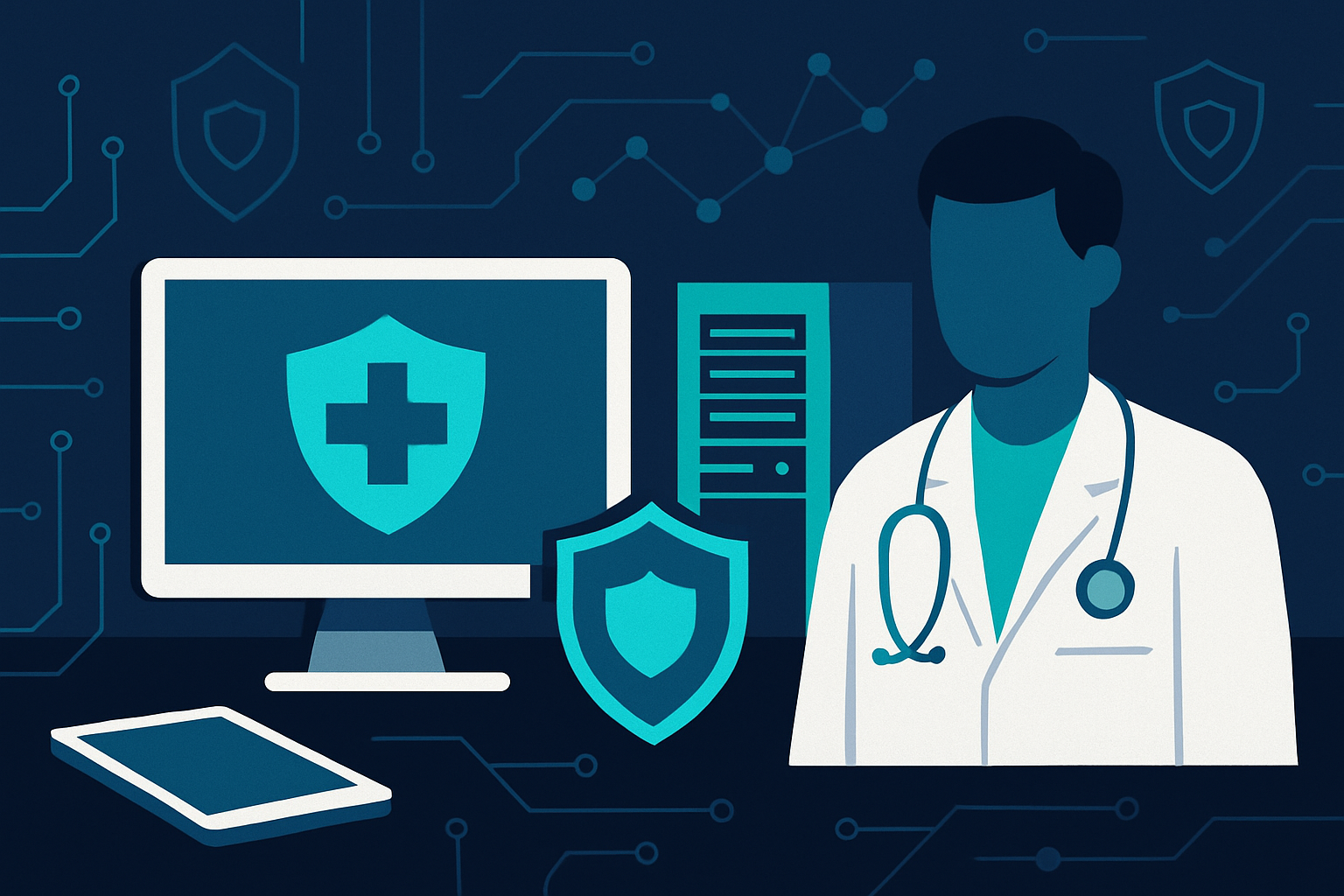
Running a medical practice is already complex enough — patient care, staffing, billing, regulatory compliance. The last thing you need is technology getting in the way. But healthcare IT isn’t just about keeping computers running. It’s about protecting patient data, maintaining HIPAA compliance, ensuring systems are available 24/7, and supporting the clinical workflows that your staff depends on every day.
Choosing the right IT partner for a medical practice isn’t the same as choosing one for a general business. Here’s what healthcare organizations should look for — and demand — from their managed IT provider.
Why Healthcare IT Is Different
Regulatory Pressure
HIPAA’s Security Rule, Privacy Rule, and Breach Notification Rule impose specific technical requirements on any organization that handles protected health information (PHI). Your IT provider must understand these rules and build your infrastructure around them — not as an afterthought, but as a foundation.
High Availability Requirements
When your EHR goes down, patient care is affected. Appointments get delayed, prescriptions can’t be sent, and clinical staff resort to paper workarounds that create risk. Healthcare systems need to be available during all operating hours — and often beyond.
Sensitive Data at Scale
Medical practices generate and store enormous volumes of sensitive data: patient records, imaging, lab results, billing information, insurance details. This data is a prime target for cybercriminals — healthcare records sell for $250–$1,000 each on the dark web, far more than credit card numbers.
Complex Vendor Ecosystem
Most medical practices work with multiple technology vendors: EHR systems, practice management software, imaging solutions, lab interfaces, e-prescribing platforms, patient portals. Your IT provider needs to coordinate with all of them.
Essential IT Services for Medical Practices
1. HIPAA-Compliant Infrastructure Management
Your IT provider should ensure that every component of your infrastructure meets HIPAA technical safeguard requirements:
- Access controls with unique user IDs, role-based permissions, and MFA
- Encryption of PHI at rest and in transit
- Audit logging across all systems that access patient data
- Automatic session timeouts on workstations and applications
- Secure configuration of firewalls, wireless networks, and remote access
They should also conduct or coordinate your annual Security Risk Assessment (SRA) — the single most important compliance requirement under HIPAA.
2. EHR Support and Optimization
Your Electronic Health Record system is the backbone of your practice. Your IT provider should:
- Ensure the EHR is properly configured, updated, and backed up
- Manage the underlying server and database infrastructure (whether on-premises or cloud-hosted)
- Coordinate with the EHR vendor for updates, patches, and troubleshooting
- Optimize performance — slow EHR systems cost clinical staff hours every day
- Support integrations with labs, pharmacies, imaging centers, and patient portals
3. Cybersecurity Built for Healthcare
Generic cybersecurity isn’t enough. Healthcare-focused IT security should include:
- Endpoint detection and response (EDR) on all workstations and servers
- Email security with advanced phishing protection (healthcare is the #1 phishing target)
- Security awareness training tailored to clinical workflows and PHI handling
- Dark web monitoring for compromised credentials
- Network segmentation separating clinical systems from guest WiFi and IoT devices
- Incident response planning specific to PHI breaches and HIPAA notification requirements
4. Backup and Disaster Recovery
Losing patient data isn’t just a business problem — it’s a patient safety issue. Healthcare backup requirements include:
- Frequent backups — hourly for critical systems, daily at minimum
- HIPAA-compliant backup storage with encryption and access controls
- Tested recovery procedures — quarterly restoration tests documented for compliance
- Defined RTOs aligned with clinical needs (most practices need critical systems back within 1–4 hours)
- Immutable backups to protect against ransomware
5. Helpdesk Support That Understands Clinical Workflows
When a medical assistant can’t access a patient chart during an appointment, or when the check-in kiosk stops working during morning rush, the response needs to be fast and informed. Your IT helpdesk should:
- Understand your clinical workflows and triage accordingly
- Respond to urgent issues within 15 minutes or less
- Know how to escalate to EHR vendors and other specialized partners
- Provide on-site support when remote resolution isn’t possible
6. Compliance Documentation and Audit Support
HIPAA compliance requires documentation. Your IT provider should help you maintain:
- Written security policies and procedures
- Risk assessment reports with remediation tracking
- Business Associate Agreements (BAAs) with all technology vendors
- Training records for all staff
- Incident response logs and breach documentation
When an auditor comes knocking — or when you need to demonstrate compliance for a payer contract — this documentation must be current and accessible.
Questions to Ask a Prospective Healthcare IT Provider
- Do you have other healthcare clients? Experience matters — ask for references.
- Will you sign a BAA? Any provider handling PHI must sign one. If they hesitate, walk away.
- How do you handle HIPAA risk assessments? They should either conduct them directly or partner with a qualified firm.
- What’s your response time for critical issues? For healthcare, 15 minutes should be the standard.
- How do you manage EHR vendor relationships? They should be willing to coordinate, not just say “call your vendor.”
- What cybersecurity stack do you deploy for healthcare clients? Look for EDR, email security, SIEM, MFA, and training — not just antivirus.
- How often do you test backups? Quarterly at minimum, with documented results.
The Cost of Getting Healthcare IT Wrong
The consequences of poor healthcare IT extend beyond typical business impacts:
- HIPAA fines: $100–$50,000 per violation, up to $1.5M per violation category annually
- Breach notification costs: Legal, forensic, notification, and credit monitoring expenses averaging $400+ per compromised record
- Reputation damage: Patients leave practices that can’t protect their data
- Clinical disruption: EHR downtime directly impacts patient care quality and safety
- Malpractice risk: If system failures contribute to adverse patient outcomes, liability exposure increases
Healthcare IT That Puts Patient Care First
At Brightworks IT, we provide managed IT services built specifically for medical practices, clinics, and healthcare organizations across the Northeast. We understand HIPAA, we know how to support clinical workflows, and we treat your technology infrastructure with the same care you give your patients.
👉 Contact Brightworks IT for a free healthcare IT assessment.
How BrightWorks IT can help
Local IT support from our offices in Richmond, VA, Vernon & Hartford, CT, Hudson Valley, NY, Oneonta, NY, Southeast Michigan, Southern California.
Need Help With Your IT?
Schedule a free, no-obligation IT assessment with our team. We'll show you exactly where your technology stands.
Written by
Nadia Patel
Nadia covers cybersecurity, cloud infrastructure, and IT strategy for growing businesses. With a background in enterprise technology and a passion for clear communication, she helps business leaders understand the technology decisions that matter most.