The vCIO Advantage: Strategic IT Leadership Without the Full-Time Cost

Nadia Patel
August 14, 2026 · 5 min read
Most small and mid-market businesses have an IT team that keeps the lights on — but no one whose job it is to decide where the lights should be next year. That’s the gap a virtual CIO closes.
What a vCIO Actually Does — And What They Don’t
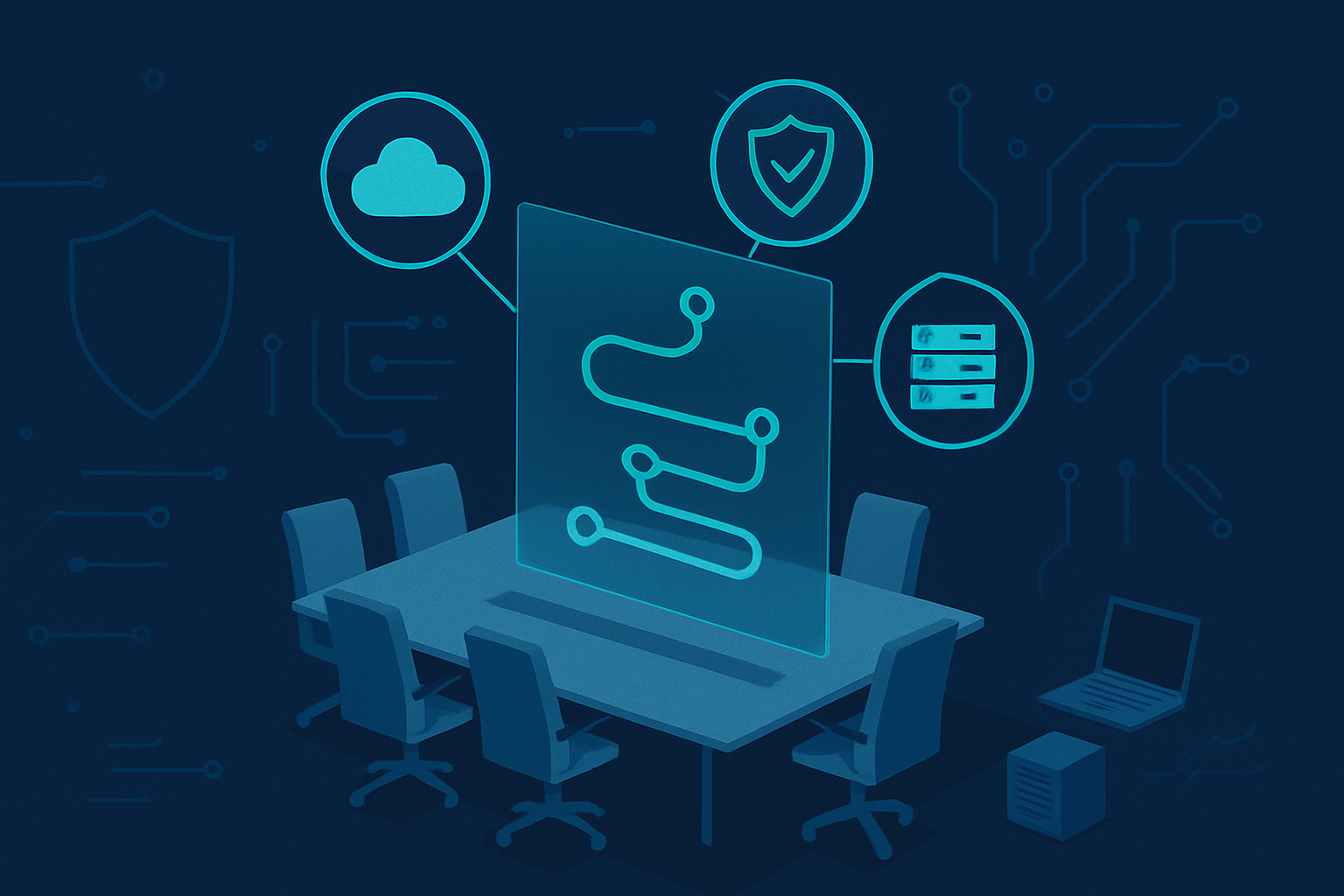
A virtual CIO (vCIO) is a senior technology executive who works with your business on a fractional basis — typically a few hours a week or a set number of days per month — to own the strategic side of IT. That means:
- Setting a multi-year technology roadmap aligned with business objectives.
- Building and defending the annual IT budget.
- Serving as the technology voice in leadership meetings and board discussions.
- Owning vendor relationships and negotiating major contracts.
- Running quarterly business reviews of the IT function.
- Guiding compliance, cybersecurity, and risk decisions at the executive level.
What a vCIO doesn’t do is push tickets. They aren’t your help desk. They aren’t your on-call engineer at 3 AM. A good vCIO engagement sits above the delivery layer — managing outcomes, not typing at keyboards.
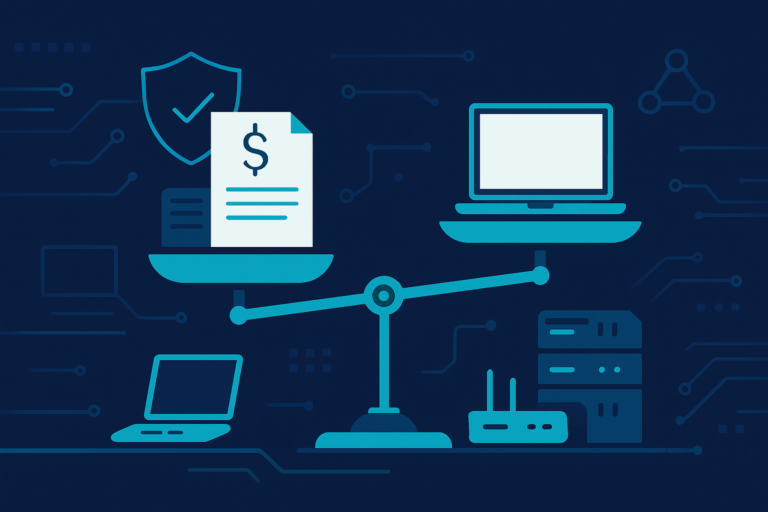
The Math on a Full-Time CIO
Hiring a full-time CIO in most U.S. metros in 2026 looks like:
- Base salary: $180,000–$260,000
- Bonus and equity: 20–40% of base
- Benefits and payroll taxes: another 25–35%
- Recruiter fees on hire: 20–30% of first-year comp
All-in, a mid-market business is committing $280K–$400K+ in year one, plus the risk that the wrong hire costs you 18 months and starts the search over. For a business with 50–300 employees, that’s almost always more capability than the operation actually needs on a full-time basis.
What a vCIO Engagement Typically Costs
Fractional CIO engagements are generally priced in one of three ways:
- Retainer: A fixed monthly fee for a defined scope — typically 8–40 hours per month.
- Bundled with managed services: Included as part of a broader MSP relationship, with strategic hours drawn from a monthly pool.
- Project-based: Discrete engagements — a compliance roadmap, an M&A integration, a platform migration — scoped and priced individually.
Even at the higher end, most engagements run 15–25% of the fully-loaded cost of a full-time hire.
Where a vCIO Earns Their Fee
1. Making the Roadmap Real
Most small businesses don’t suffer from a lack of ideas. They suffer from a lack of sequencing. A vCIO builds an 18–36 month technology roadmap that ties each initiative to a business outcome and to a realistic quarter. When a shiny object appears, the roadmap gives leadership a place to put it — or a reason to decline it.
2. Turning IT Budgeting Into a Conversation, Not a Fight
The annual IT budget conversation collapses when the person defending the number can’t connect it to business value. A vCIO speaks the language of both sides of the table — showing exactly what a proposed line item buys the business, and what happens if it’s cut.
3. Managing Vendors So They Manage Themselves
Software vendors, telecom carriers, cloud providers, and managed service providers all get better outcomes for their client when there’s an experienced counterparty in the room. A vCIO runs quarterly reviews, holds vendors to their SLAs, and renegotiates when leverage shifts — a role that’s often worth its fee in vendor savings alone.
4. Bringing Compliance and Security to the Executive Level
Compliance and cybersecurity are boardroom conversations now. NY SHIELD, CMMC, HIPAA, and cyber insurance underwriters all expect a named executive owner for the security program. A vCIO can fill that role and defensibly speak to it in front of regulators, auditors, or acquirers.
5. Being There During M&A
Integrations are where technology debt shows up loudest. A vCIO who has run integrations before will price the deal correctly, structure the transition services, and prevent the acquirer’s IT organization from being surprised in month two.
Who Benefits Most From a vCIO?
vCIO engagements aren’t right for every business. They tend to produce the strongest return in these situations:
- Businesses from about 25 to 300 employees where technology is material to operations but doesn’t justify a full-time C-suite hire.
- Firms in regulated industries — law, finance, healthcare, defense — that need executive-level compliance ownership.
- Companies going through a growth or transition inflection point: a platform replacement, an acquisition, a compliance certification, a spin-off.
- Businesses whose internal IT team is strong on execution but light on strategic leadership — a common and honest place to be.
How to Tell If Your vCIO Is Working
A good engagement should produce visible artifacts every quarter:
- An updated roadmap with what shifted and why.
- A written quarterly business review presented to leadership.
- A refreshed risk register.
- Documented vendor scorecards.
- Clear, defensible budget numbers for the coming period.
If a quarter passes and none of these exist, the engagement has drifted into technical delivery — and you’re not getting what you’re paying for.
Bottom Line
You don’t need a full-time CIO to make good strategic technology decisions. You need somebody whose job it is to think two years ahead, defend the budget, and hold vendors accountable. For most small and mid-market businesses, a virtual CIO is the right shape of that role — senior enough to be effective, right-sized enough to be affordable.
Brightworks IT offers vCIO services as a standalone engagement or bundled with our managed services. Talk with us about what a right-sized strategic engagement would look like for your business.
How BrightWorks IT can help
Local IT support from our offices in Richmond, VA, Vernon & Hartford, CT, Hudson Valley, NY, Oneonta, NY, Southeast Michigan, Southern California.
Need Help With Your IT?
Schedule a free, no-obligation IT assessment with our team. We'll show you exactly where your technology stands.
Written by
Nadia Patel
Nadia covers cybersecurity, cloud infrastructure, and IT strategy for growing businesses. With a background in enterprise technology and a passion for clear communication, she helps business leaders understand the technology decisions that matter most.